Do Jump Ropes Help You Lose Weight? (Complete Guide 2026)
Jump rope is one of the most effective and affordable exercises for weight loss. It combines cardio and full-body movement, helping you burn a significant number of calories in a short time while improving endurance, coordination, and heart health. When paired with a balanced, calorie-controlled diet, regular jump rope workouts can support steady fat loss and overall fitness. In this guide, you’ll learn how jump rope helps with weight loss, how many calories it burns, and the best ways to include it in your routine.
Jump rope helps burn calories fast, boost metabolism, and support weight loss when combined with a healthy diet and routine.
Why Jump Rope Is So Effective for Weight Loss
Jump rope is a high-intensity full-body workout, which means it activates multiple muscles at once while keeping your heart rate elevated.
Unlike slow exercises, jump rope forces your body to work continuously under pressure. This leads to faster calorie burning and improved metabolism.
When you jump rope, these muscles are engaged:
- Legs (calves, thighs, hamstrings)
- Core muscles for balance and stability
- Shoulders and arms for rope movement
- Heart and lungs for endurance
Because so many muscles work together, your body burns energy rapidly, making it an efficient fat-loss exercise.
How Jump Rope Helps You Lose Weight
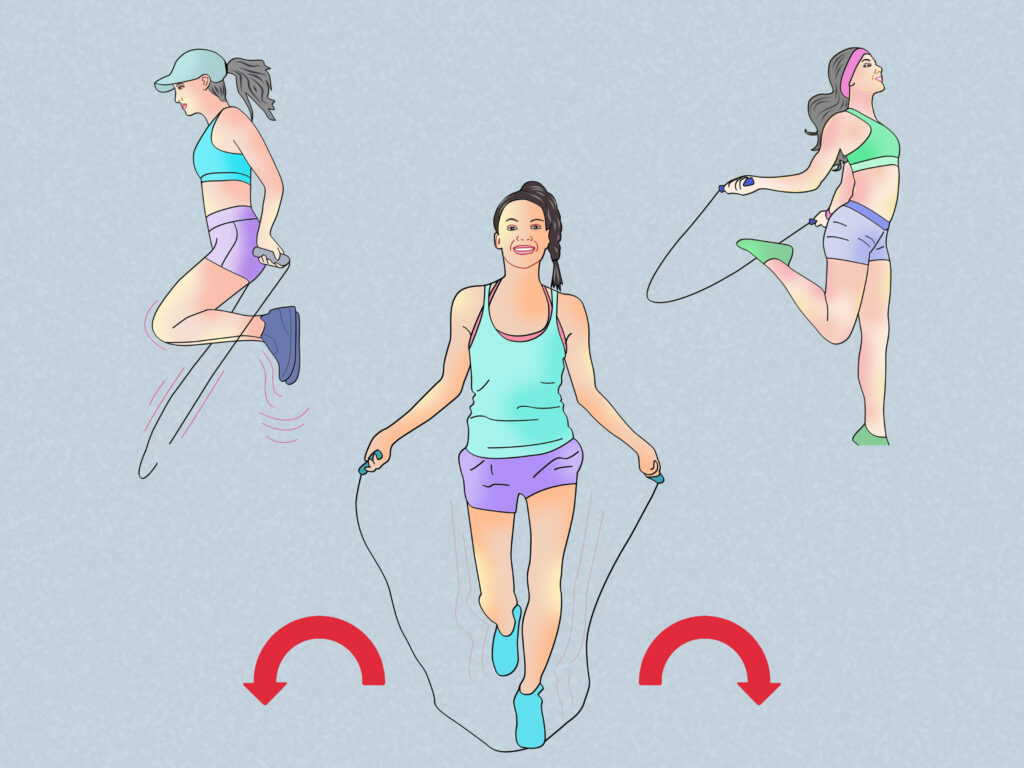
Weight loss is not about one specific exercise—it is based on a simple principle called calorie deficit.
You lose weight when you burn more calories than you consume.
Step-by-step fat loss process
- You perform jump rope workouts regularly
- Your body burns energy from food (calories)
- When calories are not enough, stored fat is used
- Over time, body fat decreases
Jump rope helps you reach this calorie deficit faster because it burns calories in a short time.
So, it does not target belly fat or thigh fat directly—but reduces overall body fat effectively.
Calories Burned from Jump Rope
One of the biggest reasons people choose jump rope is its high calorie burn rate.
Average calorie burn (10–15 minutes)
- Slow pace: 80–110 calories
- Moderate pace: 120–170 calories
- High intensity: 180–250+ calories
This means a short 15-minute session can burn as many calories as a 30–45 minute walk or slow jog.
Factors that affect calorie burn
- Body weight
- Speed and intensity
- Rest intervals
- Fitness level
- Jumping technique
The more intense your workout, the faster your fat loss results will be.
Does Jump Rope Burn Fat or Just Calories?
Jump rope burns calories, but fat loss depends on a consistent calorie deficit.
However, jump rope has an extra advantage: the afterburn effect (EPOC).
What is the afterburn effect?
After a high-intensity workout:
- Your metabolism stays elevated for hours
- Your body continues burning calories after exercise
- Fat oxidation increases during recovery
This makes jump rope more effective than slow cardio like walking or light cycling.
Health Benefits Beyond Weight Loss
Jump rope is not only a fat-burning exercise—it improves overall health and fitness.
1. Improves heart health
Strengthens cardiovascular system and improves blood circulation.
2. Builds stamina
You become less tired during daily activities.
3. Enhances coordination
Improves timing, rhythm, and balance.
4. Strengthens muscles
Especially calves, thighs, core, and shoulders.
5. Saves time
You can get effective results in just 10–20 minutes.
Best Jump Rope Workout Plan for Weight Loss

Consistency and structure are the key to results.
Beginner routine (10–12 minutes)
- 30 seconds jump rope
- 30 seconds rest
- Repeat 10–12 rounds
Intermediate routine (15–20 minutes)
- 45 seconds jump rope
- 15–20 seconds rest
- Repeat 12–15 rounds
Advanced HIIT routine (20–25 minutes)
- 1 minute fast skipping
- 20 seconds rest
- Repeat 15–18 rounds
Start slowly and increase intensity over time to avoid injury.
Jump Rope vs Other Cardio Exercises
Different cardio exercises give different results.
- Walking: Easy but slow fat loss
- Running: Good calorie burn but time-consuming
- Cycling: Low impact but moderate results
- Jump rope: High calorie burn in less time + full-body workout
If your goal is fast weight loss, jump rope is one of the most time-efficient options.
Common Mistakes People Make
Many beginners fail to see results because of simple mistakes.
1. Jumping too high
You only need small jumps—jumping too high wastes energy.
2. Wrong rope length
Incorrect rope size affects rhythm and performance.
3. Lack of consistency
Doing jump rope randomly will not produce fat loss results.
4. Ignoring diet
Exercise alone is not enough—nutrition is essential.
5. Poor landing technique
Hard landings can stress knees and ankles.
How Long Does It Take to See Results?
Results depend on consistency, diet, and intensity.
- 1–2 weeks: Better stamina and energy
- 3–4 weeks: Early visible fat loss
- 6–8 weeks: Noticeable body transformation
If combined with a healthy diet, results come even faster.
Who Should Be Careful with Jump Rope?
Jump rope is safe for most people, but not suitable for everyone.
Be cautious if you have:
- Knee or ankle injuries
- Joint pain
- Severe obesity (start with low-impact cardio first)
- Balance problems
In such cases, start slowly or consult a fitness professional.
Expert Tips for Faster Weight Loss

If you want faster results, follow these tips:
- Use HIIT-style intervals
- Train 4–6 days per week
- Maintain a calorie deficit diet
- Combine with strength training
- Track progress weekly
- Stay consistent, not perfect
Small daily improvements lead to big long-term changes.
FAQ’s
1. How long should I jump rope daily to lose weight?
Start with 10–15 minutes daily and gradually increase to 20–30 minutes for better results.
2. Does jump rope reduce belly fat?
It reduces overall body fat, including belly fat, when combined with a calorie deficit diet.
3. Is jump rope better than running for weight loss?
Yes, jump rope can burn similar or more calories in less time compared to running.
4. Can beginners do jump rope daily?
Yes, but beginners should start slowly to avoid strain or injury.
5. What is the best time to jump rope?
Morning or evening both are fine—the best time is when you can stay consistent.
Conclusion
Jump rope is a simple yet highly effective exercise for weight loss. Just 10–20 minutes daily can help burn calories, improve cardiovascular fitness, and support fat loss. It requires minimal equipment, can be done almost anywhere, and is an affordable way to stay active. Combined with a healthy diet, jump rope can contribute to sustainable, long-term weight management.
Related post
When You Lose Weight, Where Does It Go? The Complete Science of Fat Loss
Can Drinking Tea Help You Lose Weight? A Complete Evidence-Based Guide
How to Eat Chia Seeds to Lose Weigh- 11 Proven Ways That Actually Work